
2023 ArtScape Artist-In-Residence
Josephine Clarke is a rural, multidisciplinary artist practicing in West Arichat, Nova Scotia, Canada. Her practice addresses themes of deindustrialization, labour, and environmental stewardship. Land-based activities that once influenced her rural upbringing now inform her practice. She primarily works with textiles, salvage, sculpture, and installation.
Since earning her Bachelor of design at Kwantlen Polytechnic University, Josephine has participated in international residences with ArtsUnite, the Cape Breton Centre for Craft and Design, and Paris and Doucmenta Fine Arts Field School in France and Germany.
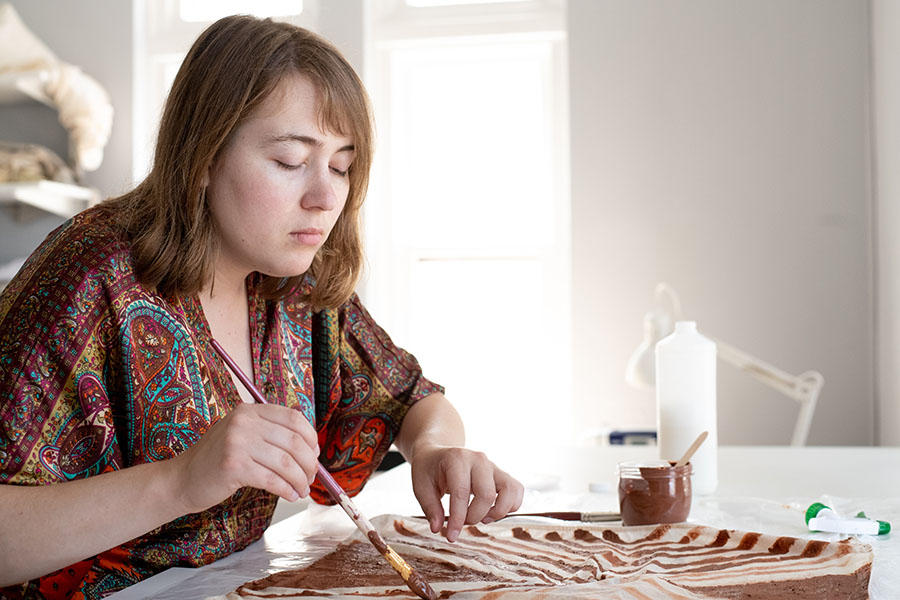
Josephine began her art practice as a forager and natural dyer, collecting wild foliage and growing heirloom plants to make paints and dyes. As she spent time outside, she noticed the peculiarities of human relationships with the land, leading to an examination of this relationship through her work. She says that ‘relating to the land is what ties my practice together’, and she is conscious that the land and water repeatedly warn us of the threats of global climate change. Josephine seeks out remote residential roads, logging roads, closed highways, and other rural landscapes, to see nature in its real form, and the unfiltered reality of human impact, and how these things intersect. Her past projects examining these themes are:
Summer 2020 — Canada’s Ocean Playground: Trash it!
Josephine created fibre art landscape images of familiar Cape Breton landmarks with the litter that people left behind.
Fall 2020 — Rural Creative Legacy Project
She developed a series of sculptures made from textiles and fragments of abandoned machinery, abandoned by rural Cape Breton industry.
Spring 2021 — Everything is Fine — Nothing to see here
But has it always been this way?
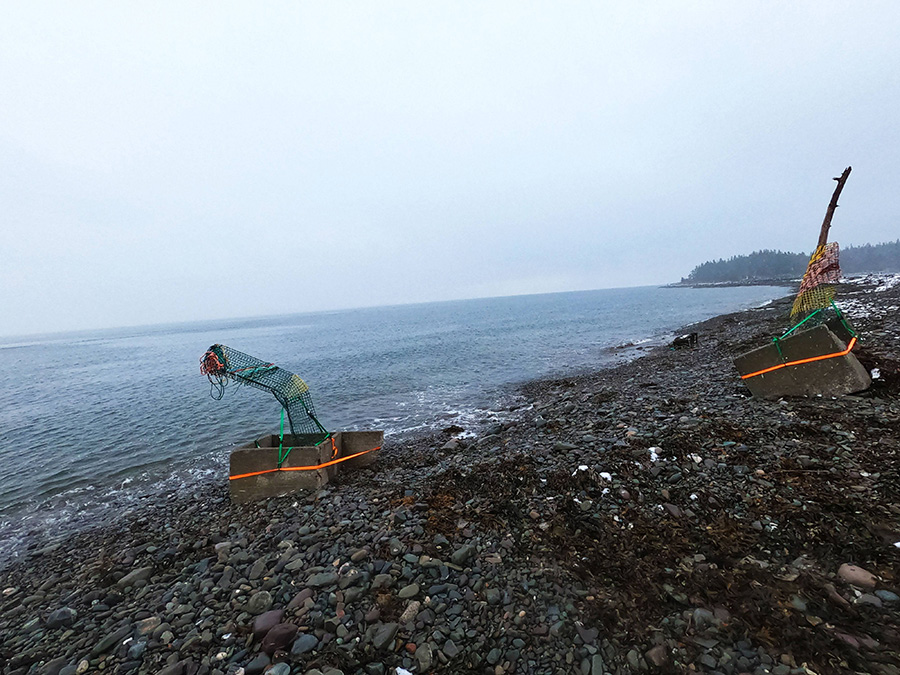
With the support of Canada Council for the Arts in 2021, Josephine expanded her practice to include salvage installations with discarded fishing gear. By abstracting trash, Josephine was able to highlight the impact it has on rural life and spaces. She created two site specific outdoor installations, free to the public in Guysborough County, (Everything is Fine-Nothing to see here) and Richmond County (But has it always been this way?)
We Are Visitors continues Josephine’s explorations with the creation of a series of textile sculptures, a textile dyeing workshop, open studios, and a public performance.
Board memberships
- Visual Arts Nova Scotia
Guild memberships
- PAINTS (Professional Artists in the Schools
- Nova Scotia Designer Craft Council
- CARFAC Maritimes
- Cape Breton Centre of Craft and Design
- Textile Society of America
Grants awarded
- Canada Council of the Arts – Explore and Create and Digital Originals Mirco Grants
- Nova Scotia Job Creation Project: Creative Legacy Arts Grant
Awards and scholarships
- 2018
- Wildflower Scholarship
- 2017
- One World Study Abroad Grant
- 2016
- John Fluevog Unique Soles Award
- 2015
- The Monty Endowed Award
Group exhibits
- 2021
- Atlantic Vernacular. Digital. New Brunswick Craft Council, Fredericton, NB
- Are Wilds. The Covent Art Gallery, Sydney, NS
- 2020
- Elements: Earth, Air, Water and Fire. Bear River Artworks Gallery, Bear River, NS
- 2018
- The Show. Kwantlen Polytechnic University, Richmond, BC
- 2017
- International Arts Focus Week, Richmond, BC
Solo exhibits
- 2021
- What is Left Behind? Corridor Gallery, Visual Arts Nova Scotia, Halifax, NS
- 2020
- Roads Less Travelled. Digital. In partnership with Canada Council of the Arts
- What is Left Behind? Lumiere Art at Night Festival, Syndey, NS
- Canada’s Ocean Playground: Trash It! Third Shift Art at Night Festival, St. John, NB
- 2019
- Rebirth. Lumiere Art at Night Festival. Sydney, NS